Best Diver Watch Under $150: Complete Buying Guide 2026
Find the perfect diver watch under $150. Our 2026 guide covers specs, budget breakdowns, and top picks for every need.
Disclosure: This post contains affiliate links. If you purchase through these links, PapaCasper earns a small commission at no extra cost to you. We only recommend products we'd actually use.
Best Diver Watch Under $150: Complete Buying Guide 2026
You don't need to spend a thousand dollars to get a solid diver watch. The sub-$150 market has exploded in the last few years, with serious options that can actually handle water sports, travel, and everyday wear without breaking the bank.
Table of Contents
- What to Look For in a Diver Watch
- Budget Breakdown: What You Actually Get
- Top Picks by Use Case
- Common Mistakes to Avoid
- Frequently Asked Questions
- Final Verdict: What Most People Should Buy
This guide breaks down what matters when buying a diver watch in this price range, cuts through the marketing noise, and gives you the real best picks based on actual specs and user feedback. Whether you're a casual swimmer, a recreational diver, or just someone who wants a reliable watch that won't panic if it gets wet, we've got you covered.
What to Look For in a Diver Watch
Before you start comparing prices and colors, understand what actually makes a diver watch functional. This isn't just about aesthetics—certain features exist for a reason, and skipping them will leave you with an expensive wrist decoration that fails when you need it.
Water Resistance Ratings: The Most Important Number
Water resistance is measured in meters, and this is where most people get confused. The number doesn't mean "you can dive to this depth safely." It means the watch can handle static pressure at that depth in controlled conditions. Real diving involves movement, temperature changes, and dynamic pressure, so always buy deeper than your actual use case.
Here's the practical breakdown:
- 50-100M: Splash and shallow water. Swimming, snorkeling. Not reliable for diving.
- 200M: The sweet spot for most divers. Safe for recreational diving down to about 40-60 feet.
- 300M+: Technical diving territory. Overkill for casual use, but you're paying for insurance.
Look for watches with screw-down crowns if you're serious about water sports. This simple mechanism locks the winding crown in place, preventing accidental opening that can kill your water resistance in seconds.
Movement Type: Quartz vs. Automatic
Quartz watches (battery-powered) are accurate, low-maintenance, and cheap. They'll outlast most automatic watches and never need service if you don't abuse them. They're the no-brainer choice if you just want something reliable.
Automatic watches (self-winding mechanical) are the soul of watch collecting. They require occasional service, they're less accurate, but they have character and will last decades with proper care. In the under-$150 range, you're getting entry-level automatics that are solid but not exceptional. Choose this if you like the ritual of winding a watch and don't mind the occasional servicing.
Crystal Material: Glass Matters More Than You Think
The watch face is covered by a crystal. Three types exist:
- Acrylic: Soft, scratches easily, cheap to replace. Feels plasticky but won't shatter.
- Mineral glass: Standard stuff. Scratch-resistant, good clarity. Most watches use this.
- Sapphire: Expensive and hard as hell. Resists scratches beautifully. You're paying a premium in this price range if you get sapphire—it's worth it if you want the watch to look new in five years.
Sapphire is worth seeking out if your budget allows, because diver watches live in harsh conditions. Salt spray, sand, and rough treatment will destroy mineral glass faster than you'd expect.
Lume (Luminous Paint)
Lume is the glowing paint on the hands and hour markers. This matters for underwater visibility and emergency situations. BGW9 and C3 are the gold standards—they glow bright and last for hours. Cheap lume fades quickly and looks dead after a few minutes in the dark. Check reviews for this. A watch without good lume isn't really a tool watch.
Dial Legibility
Underwater, your vision changes. The water magnifies everything, but contrast becomes critical. Look for high-contrast dials—dark background with bright hands and markers. Orange, yellow, and white hands read faster than black ones. This isn't fashion; it's function.
Case Size and Wrist Comfort
Diver watches run big—typically 40-45mm. This is functional. Larger faces are easier to read, and larger cases accommodate the internal machinery for water resistance. If you have a smaller wrist, don't force yourself into a 45mm watch. A 41mm watch is still legitimate. A 38mm diver watch exists but feels like a compromise.
Bezel Type
Rotating bezels are a diver watch staple. You set the bezel to 12 o'clock when you start a dive and rotate it to mark time elapsed. It's a simple but effective tool. Some watches use unidirectional bezels (rotate only counter-clockwise) for safety—if bumped, you only lose time remaining, not gain it. This matters more for technical diving. For casual use, bidirectional is fine.
Budget Breakdown: What You Actually Get
Price doesn't always equal quality in watches. The brand tax exists, and sometimes you're paying for heritage. Here's what the tiers actually deliver:
$20-50: Functional but Compromised
You can get a working diver watch here. Most use quartz movement, basic mineral glass, and decent water resistance. They'll keep time and survive water exposure. The tradeoff: case finish is often rough, lume is weak, bezels are stiff or loose, and durability is questionable after a year of regular use.
Best for: Budget-conscious buyers, backup watches, testing the waters before investing more. These are disposable in the best sense—if you lose or destroy it, you won't cry.
$50-100: The Real Value Zone
This is where diver watches become legitimate. You get better case finishing, reliable movements, improved lume, and watches that will actually last 5+ years with normal wear. Brands start taking their reputation seriously here. Sapphire crystals start appearing. This tier offers the best bang for your buck.
Best for: Regular divers, travelers, daily wear enthusiasts who want confidence. If you're buying one diver watch to keep forever, spend here.
$100-150: Premium Budget Tier
Excellent automatics, Japanese movements with pedigree, sapphire crystals standard, serious case finishing, and water resistance that justifies the price tag. You're paying for craftsmanship and brand reputation. These watches will compete with $500 watches in functionality; you're just not paying for the heritage markup.
Best for: Collectors, people who want a watch to keep for decades, anyone serious about diving beyond casual recreational use.
Top Picks by Use Case
Best Overall Value: FreeDiver Sapphire Crystal Diver Watch (Japanese Automatic)
Price: $105.00 | Rating: 4.6/5
If you're buying one watch in this entire price range, consider this. Japanese automatic movement, 200M water resistance, sapphire crystal, and legitimate lume. It's a tool watch that looks professional and will actually serve you underwater or at your desk. The automatic movement feels premium compared to quartz at this price point.
Buy on Amazon | Alternative variant
Pros: Sapphire crystal, automatic movement, deep water resistance, excellent reviews
Cons: Automatic watches require occasional servicing; not the cheapest option
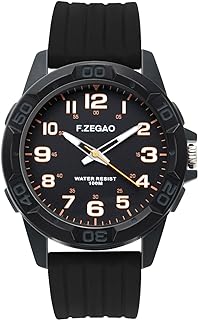
Best Budget Pick: 100M Waterproof Analog Watch
Price: $21.58 | Rating: 4.4/5 (50+ bought recently)
Don't let the price fool you. This is a legitimate entry point. 100M water resistance handles swimming and light snorkeling, the dial is clean and readable, and the 45mm case feels substantial. It won't win any awards for finishing, but it works. Over 50 units sold in the past month means real people trust it.
Pros: Dirt cheap, solid ratings, large readable dial, good for testing if you want a diver watch
Cons: 100M is shallow for actual diving; basic case finishing; won't feel premium
Best for Recreational Diving: 41MM Men's Dive Watch with Quartz
Price: $50.99 | Rating: 4.7/5
200M water resistance, excellent dial contrast with gradient colors (orange, red, green, black options), quartz accuracy, and luminous hands that actually glow. This is the watch that competes with $300 options. The rating speaks for itself—4.7 stars means real divers tested this underwater.
Pros: 200M rating, excellent contrast dial, BGW9 lume, lowest price for this spec level, multiple color options
Cons: Quartz (not automatic); case finishing not as premium as higher-priced options
Best Digital Option: 10 ATM Submersible Digital Watch
Price: $25.79 | Rating: 4.3/5 (50+ bought recently)
Want a diver watch that's functional rather than beautiful? This digital sports watch hits 100M (10 ATM), has a stopwatch, alarm, and luminous LCD screen for underwater readability. It's not a traditional diver watch, but it's built for water and performs the job well. Perfect if you want something that feels like actual dive gear.
Pros: Digital features useful underwater, stopwatch for timing dives, affordable, proven sales
Cons: Not a mechanical watch; plastic-heavy construction; won't age gracefully
Best Automatic Under $90: Pro Diver Collection Chronograph Watch
Price: $79.95 | Rating: 4.7/5
A chronograph diver watch under $80 shouldn't exist, but here we are. This is a brand name with actual heritage—Invicta's Pro Diver line has been around for decades. Automatic movement, chronograph functionality, and a case that looks twice its price. It's the Goldilocks option for people who want features without going full premium.
Pros: Chronograph function, automatic movement, brand reputation, high rating, excellent value
Cons: Mineral crystal (not sapphire); need to confirm water resistance specs for your use case
Premium Automatic: Pro Diver Collection (Standard Automatic)
Price: $87.45 | Rating: 4.5/5
If you want automatic simplicity without chronograph complications, this is the refined option. Same Pro Diver heritage, same movement quality, but a cleaner dial. Less is more for tool watches.
Pros: Automatic, brand heritage, proven durability, straightforward design
Cons: No chronograph if you need timing; similar price to chronograph version, so compare features
Best Technical Diver Watch: FreeDiver Helium-Safe Automatic 1000M
Price: $150.00 | Rating: 4.3/5
You wanted the maximum possible, and here it is. 1000M (3,280 feet) water resistance with helium-safe technology for saturation diving. This is overkill for 99% of recreational divers, but if you're serious about technical diving or just want the ultimate safety margin, this exists at exactly your budget ceiling. Japanese automatic movement, sapphire crystal, the full package.
Pros: Maximum water resistance, helium-safe valve, sapphire crystal, automatic movement, ultimate insurance
Cons: Overkill for casual divers; 1000M spec is rarely tested by consumers; diminishing returns on price
Common Mistakes to Avoid
- Confusing water resistance with actual depth limits: A 100M watch isn't a diving watch. If you plan to dive, spend the extra $30-50 to get 200M minimum. The difference is safety.
- Ignoring lume quality in reviews: A dead lume is a broken watch underwater. Check if reviewers mention lume brightness and longevity. Weak lume is a dealbreaker for tool watches.
- Buying the cheapest option and expecting premium results: A $20 watch has $20 worth of finishing. This isn't snobbery; it's material reality. If durability matters, spend at least $50. The jump from $20 to $50 is massive. The jump from $50 to $150 is refinement.
- Assuming bigger is better: A 45mm watch looks silly on a 7-inch wrist. Measure your wrist and check actual case dimensions before buying. Comfort beats specs.
- Overlooking bezel functionality: A stiff or loose bezel defeats the purpose. Read reviews about how the bezel feels to operate. A rotating bezel that spins freely is what you want, not one that requires pliers to move.
Frequently Asked Questions
Can I actually dive with a watch rated for 200M?
Yes, with caveats. 200M handles recreational diving to 40-60 feet safely. The rating assumes static pressure; real diving has movement and temperature changes that stress the watch more. If you're diving deeper than 60 feet or doing saturation diving, spend more for 300M+. For casual pool and reef diving, 200M is legitimate.
Is sapphire crystal worth the extra money?
If you plan to keep the watch for 5+ years and care how it looks, absolutely. Sapphire resists scratches to a degree that mineral glass can't match. After a year of use, you'll see the difference. In the $50-150 range, sapphire is available at several price points and worth seeking out.
Quartz or automatic for a diver watch?
Quartz wins on accuracy and reliability. Automatic wins on feel and heritage. For pure function, quartz is better. For enjoyment and longevity as a kept item, automatic is the emotional choice. Both are legitimate. If you're buying your first diver watch, quartz will frustrate you less.
Why are diver watches so big?
Size is functional. Larger cases contain more machinery for water resistance. Larger dials are easier to read underwater. Larger proportions feel right in a wetsuit. A small diver watch looks and feels wrong. Accept it.
Should I buy on Amazon Prime?
If you're not already Prime, Amazon's free trial gets you free two-day shipping. Worth testing if you want the watch fast. Most of these options ship via Prime, so you'll have it within days rather than weeks. If you're ordering multiple items, Prime pays for itself immediately.
Final Verdict: What Most People Should Buy
If you want one recommendation: get the 41MM Men's Dive Watch with Quartz Movement ($50.99). It's the balance point. 200M water resistance handles everything you'll actually do. The dial contrast is excellent. The 4.7 rating means it survives real use. At $50, it's affordable enough to not stress over and good enough to keep for years.
If you want to go automatic and spend more: the FreeDiver Sapphire Crystal ($105) is exceptional. Sapphire crystal and Japanese automatic movement justify the premium. You're getting a watch that will look new in five years and perform indefinitely.
If you want to test the waters: the $21 budget option works. But understand what you're compromising on. It's a gateway drug to the hobby, not a forever watch.
The good news: every watch on this list is legitimate. You're not accidentally buying trash. You're choosing between good and better, not good and terrible. Pick the one that fits your use case and budget, and stop overthinking it.
By the PapaCasper editorial team — Updated March 2026