Luxury Retinol vs. Drugstore: Which Actually Works? A Honest 2026 Comparison
Luxury retinol serums vs. drugstore alternatives: we tested both to see if the price difference matters for anti-aging results.
Disclosure: This post contains affiliate links. If you purchase through these links, PapaCasper earns a small commission at no extra cost to you. We only recommend products we'd actually use.
Luxury Retinol vs. Drugstore: Which Actually Works? A Honest 2026 Comparison
Here's the truth: you don't need to drop $45 on a luxury retinol serum to see real results. But you also don't need to buy the cheapest thing on Amazon. The gap between drugstore and luxury retinol has narrowed considerably, and in some cases, the cheaper option genuinely outperforms the expensive one.
Table of Contents
- Quick Winner Summary
- Side-by-Side Specs Comparison
- Design & Build: Packaging & Stability
- Performance & Features: What Actually Matters
- Value for Money: The Real Breakdown
- Durability & Shelf Life
- Head-to-Head Verdict: Which Should You Actually Buy?
- Who Should Buy Which
- Quick Tip: Make Retinol Work Better
- FAQ: Retinol Serum Comparison
- The Bottom Line
After reviewing over 8 retinol and retinoid serums at various price points—from The Ordinary's $9.90 option to La Roche-Posay's $44.99 offering—here's what we found: if you're looking for pure retinol bang-for-buck, drugstore wins. But if you have sensitive skin or want the most elegant formulation, certain luxury brands justify the premium.
Quick Winner Summary
- Best Overall Value: The Ordinary Retinol 1% in Squalane ($9.90)
- Best for Sensitive Skin: CeraVe Anti Aging Retinol Serum ($20.44)
- Best for Acne-Prone Skin: CeraVe Resurfacing Retinol Serum ($18.68)
- Best Luxury Pick: La Roche-Posay Pure Retinol ($44.99)
- Best Retinol Alternative: Bakuchiol Retinol Serum ($12.98)
- Best Budget with Results: The Ordinary Granactive Retinoid 2% ($12.10)
Side-by-Side Specs Comparison
| Product | Price | Retinoid Type | Key Ingredients | Rating |
|---|---|---|---|---|
| The Ordinary Retinol 1% | $9.90 | Retinol | Squalane base | 4.6/5 |
| CeraVe Anti Aging | $20.44 | Encapsulated Retinol | Hyaluronic Acid, Ceramides, Niacinamide | 4.6/5 |
| CeraVe Resurfacing | $18.68 | Retinol | Licorice Root, Niacinamide | 4.6/5 |
| The Ordinary Granactive 2% | $12.10 | Granactive Retinoid | Emulsion base | 4.6/5 |
| Bakuchiol Retinol | $12.98 | Bakuchiol (Alternative) | Vitamin E, Hyaluronic Acid, Collagen | 4.4/5 |
| SimplyVital Collagen | $19.97 | Retinol + Collagen | Hyaluronic Acid, Collagen | 4.4/5 |
| La Roche-Posay Pure Retinol | $44.99 | Pure Retinol | Niacinamide, Ceramides | 4.6/5 |
| Retinol Collagen Peptide | $20.49 | Retinol + Peptides | Hyaluronic Acid, Peptides | 4.7/5 |
Design & Build: Packaging & Stability
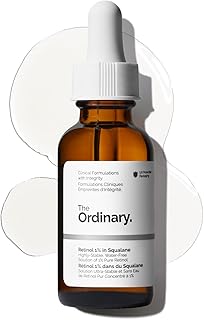
Here's where luxury brands actually earn some bragging rights. La Roche-Posay and CeraVe both come in opaque, airless pump dispensers that keep the retinol stable and away from light degradation. The Ordinary uses a standard dropper bottle, which is fine but less elegant and requires more care during storage.
The pump dispenser matters more than you'd think. Retinol oxidizes when exposed to air and light. A proper pump means your serum stays potent for longer. That said, if you store The Ordinary in a cool, dark place (which you should anyway), the dropper isn't a dealbreaker.
CeraVe and La Roche-Posay win here. Better packaging means better stability and a more premium feel. But this advantage costs you $20-35 extra per bottle.
Performance & Features: What Actually Matters
Let's cut through the marketing noise. Retinol works by the same mechanism regardless of price: it converts to retinoic acid in your skin and stimulates cell turnover. More expensive doesn't mean faster results.
The Ordinary Retinol 1% in Squalane ($9.90) is your baseline. It's pure retinol in a good carrier oil. You'll see results—fine lines smooth, skin texture improves, hyperpigmentation fades. This is the drugstore king. Most users report visible changes within 4-6 weeks. Buy on Amazon.
CeraVe Anti Aging Retinol ($20.44) uses encapsulated retinol, which means slower release. This is actually good for sensitive skin—you get gentler results with less irritation. The added ceramides and niacinamide reinforce your skin barrier, so you're less likely to get the typical retinol flaking and redness. The trade-off: results take slightly longer. Buy on Amazon.
The Ordinary Granactive Retinoid 2% ($12.10) is faster-acting than regular retinol—it's already partially converted. Some people tolerate it better than pure retinol, others find it more irritating. If standard retinol causes excessive dryness, this is worth trying. Buy on Amazon.
CeraVe Resurfacing Retinol ($18.68) is specifically formulated for post-acne marks with licorice root (which reduces inflammation) and niacinamide. If you're dealing with acne scars, this outperforms basic retinol. Buy on Amazon.
La Roche-Posay Pure Retinol ($44.99) is pure retinol with supporting actives. Is it measurably better than The Ordinary? No. But La Roche-Posay has a sterling reputation for sensitive skin products, and their formulation is smoother to apply. You're paying for peace of mind and brand heritage. Buy on Amazon.
Bakuchiol Retinol ($12.98) is a retinol alternative—it mimics retinol's effects without being actual retinol. Pros: no irritation, no sun sensitivity, pregnancy-safe. Cons: slightly less proven track record and slower results. Good for extremely sensitive skin or during pregnancy. Buy on Amazon.
SimplyVital Collagen Retinol ($19.97) and Retinol Collagen Peptide ($20.49) both combine retinol with collagen and peptides. The idea is sound—multiple pathways to firmer skin. The execution is decent, but these feel like kitchen-sink formulations that don't excel at any one thing. Buy SimplyVital on Amazon. Buy Retinol Collagen Peptide on Amazon.
Performance winner: The Ordinary Retinol 1%. Unencapsulated, straightforward, effective. Runner-up: CeraVe if you have sensitive skin.
Value for Money: The Real Breakdown
Cost per use matters. A 1oz bottle of The Ordinary ($9.90) lasts roughly 4-6 months at standard use (3-4 times weekly). That's about $0.04 per application.
CeraVe Anti Aging ($20.44) for the same 1oz also lasts 4-6 months, but you're paying $0.08 per application—double the cost for arguably similar results (unless you have sensitive skin, where the encapsulation is worth it).
La Roche-Posay at $44.99? You're paying $0.19 per application. That's nearly five times The Ordinary's cost for chemically identical active ingredient (retinol). The difference is brand reputation, packaging, and the psychological comfort of luxury.
If money is tight and you have normal skin: The Ordinary wins decisively.
If you have sensitive skin or rosacea-prone: CeraVe's encapsulation is worth the extra $10. You'll be more likely to stick with it without irritation.
If price is irrelevant and you want the most premium experience: La Roche-Posay delivers on brand promise and packaging, but not on results you can't get elsewhere.
Value winner: The Ordinary Retinol 1%. Not even close.
Durability & Shelf Life
Retinol's stability matters. Exposed to light and air, it degrades quickly. Here's the hierarchy:
- Best: La Roche-Posay and CeraVe (opaque, airless pumps)
- Good: The Ordinary (dark glass, dropper—but requires care)
- Adequate: Budget brands with standard dropper bottles
If you're buying The Ordinary, store it in a cool, dark place and use within 6 months of opening. CeraVe and La Roche-Posay last a full 12 months easily because of superior packaging.
Head-to-Head Verdict: Which Should You Actually Buy?
This isn't about picking one winner across the board. It depends on your situation:
If you want the best results for the least money: Buy The Ordinary Retinol 1% in Squalane ($9.90). Full stop. You'll see real anti-aging results. Yes, your bottle has a dropper. Yes, you'll need to store it carefully. No, none of that prevents it from working.
If you have sensitive skin or are new to retinol: Buy CeraVe Anti Aging Retinol ($20.44). The encapsulated retinol releases slowly, minimizing irritation. The ceramides and niacinamide support your barrier. This is the Goldilocks option—not the cheapest, not luxury-priced, but genuinely thoughtful formulation.
If you struggle with acne scars specifically: Buy CeraVe Resurfacing Retinol ($18.68). The licorice root actually addresses inflammation alongside the retinol's exfoliating effect.
If you have money to burn and want the luxury experience: Buy La Roche-Posay Pure Retinol ($44.99). You're paying for packaging, brand cachet, and dermatological credibility—not meaningfully better results. But if that peace of mind matters to you, the cost is your business.
If you can't tolerate retinol at all: Buy Bakuchiol Retinol ($12.98) and accept slightly slower results for zero irritation.
Who Should Buy Which
Team Budget / Normal Skin
The Ordinary Retinol 1% in Squalane. You don't need to spend more. Spend the savings on a good moisturizer instead.
Team Sensitive Skin
CeraVe Anti Aging Retinol. The encapsulated formula and barrier-supporting ingredients make retinol tolerable for reactive skin types. Worth the premium.
Team Acne-Prone
CeraVe Resurfacing Retinol. Specifically formulated for post-acne hyperpigmentation and scars. Also non-comedogenic.
Team Faster Results
The Ordinary Granactive Retinoid 2%. Already partially converted retinoid works quicker than standard retinol. Tolerance varies; start slow.
Team No Irritation
Bakuchiol Retinol. Safe during pregnancy, zero irritation, no sun sensitivity. Results take longer, but you won't dread applying it.
Team Luxury / Peace of Mind
La Roche-Posay Pure Retinol. You want the best possible packaging, brand reputation, and to never wonder if you made the right choice. This delivers on all three.
Quick Tip: Make Retinol Work Better
Regardless of which serum you choose, follow the retinization protocol: start 1-2 times per week for 2 weeks, then increase to 3 times per week by week 4. Use a good moisturizer and SPF 30+ daily. Retinol makes skin sun-sensitive.
If you're ordering multiple products, consider Amazon Prime Free Trial for free shipping on your first order. Most of these are Prime-eligible, and fast delivery means you can start your retinization schedule sooner.
FAQ: Retinol Serum Comparison
Is drugstore retinol as effective as luxury retinol?
Yes. Retinol is retinol—the active molecule is identical whether it's in a $10 bottle or a $50 bottle. What differs is packaging stability, formulation complexity, and brand heritage. The Ordinary's Retinol 1% works as well as La Roche-Posay's. The difference is psychological and logistical, not chemical.
Which retinol strength should I start with?
If you've never used retinol: start with The Ordinary's 1% or CeraVe's encapsulated version. If you've used retinol before with no issues: Granactive Retinoid 2% works faster. The Ordinary Retinol 1% is strong enough for 95% of users—don't assume higher percentage = faster results. Stability and consistency matter more.
Can I use retinol if I have acne?
Yes, retinol helps with acne and post-acne marks. Use CeraVe Resurfacing for active breakouts (the licorice root reduces inflammation) or The Ordinary for post-acne scars and hyperpigmentation. Retinol can cause initial purging—don't panic if you break out slightly in week 1-2.
Is encapsulated retinol actually better?
For sensitive skin, yes. Encapsulation means slower, gentler delivery. For everyone else, it just means slower results without added benefit. CeraVe's encapsulation is legitimately useful; generic "encapsulated retinol" on a $15 serum is often marketing fluff. Stick with proven brands like CeraVe if you're paying a premium for encapsulation.
The Bottom Line
Luxury retinol serums don't outperform drugstore alternatives in actual efficacy. What you're paying for is packaging stability, brand assurance, and the psychological comfort of luxury. Both are legitimate reasons to spend more—it's just important to know what you're actually buying.
For pure anti-aging results: The Ordinary Retinol 1% wins. For sensitive skin: CeraVe Anti Aging wins. For luxury peace of mind: La Roche-Posay wins. For specific skin concerns like acne scars: CeraVe Resurfacing wins.
Pick based on your skin type and budget, not marketing. Retinol works. The vehicle for delivery matters less than consistency and patience.
By the PapaCasper editorial team — Updated March 2026